Cover Story
MiniCPM5-2B and Kimi-2.6 move in together at Hana Agent (OpenHanako).
What kind of story will unfold between them?
Chapter 1: Hello, Hana
I git cloned the source code of Hana (Hana Agent) and set up development and deployment locally. In this setup: the on-device models responsible for tool calling, coding, and long-text output are MiniCPM5-2B (bumblebuttpow/MiniCPM5-2B-heretic-abliterated-MLX-8bit), plus Kimi-2.6 for passing image content (to save cost).
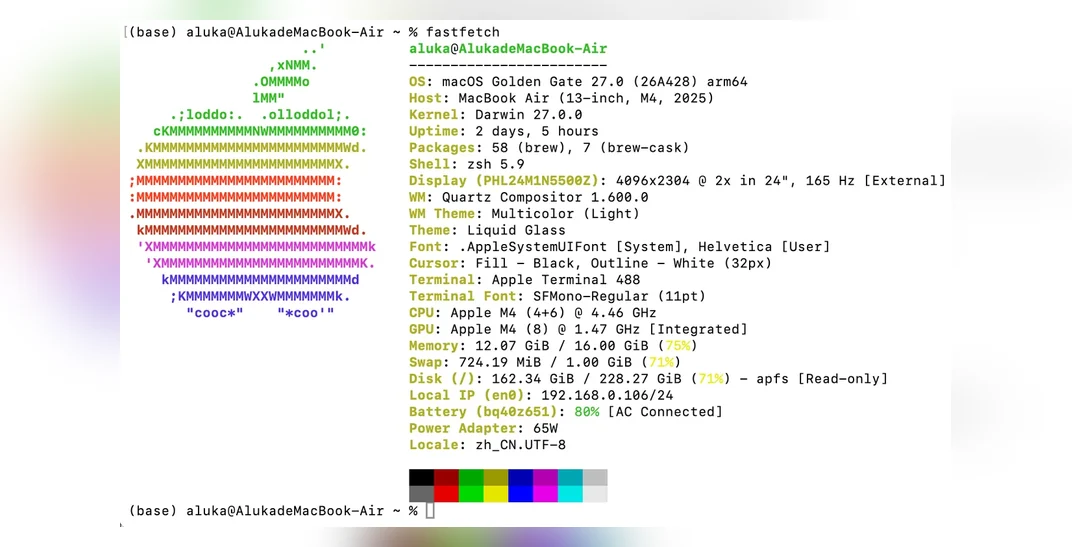
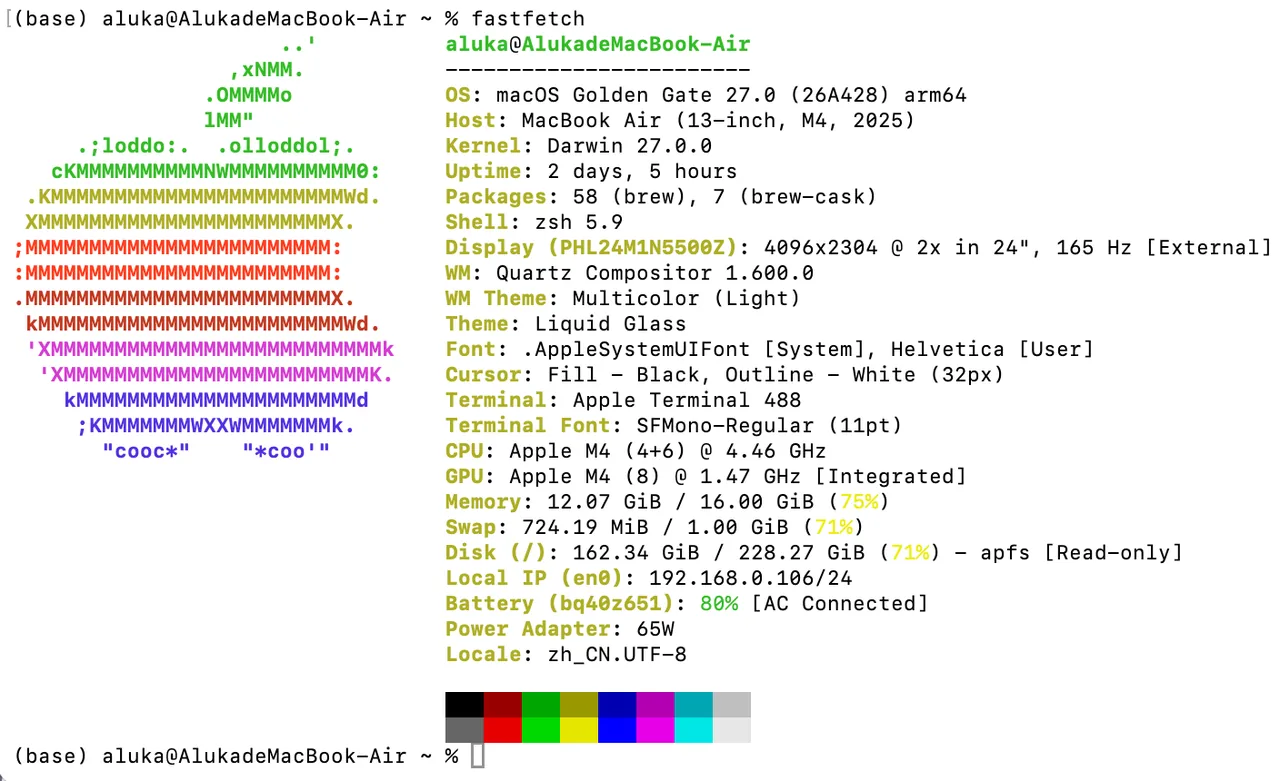
Within the OpenHanako (Hana Agent) framework, we tried to build a lightweight local personal assistant. The hardware was limited to an M4 with 16GB (configuration shown below). To run within that limited memory, we chose to integrate mlx-lm into the source code and run MiniCPM5-2B inference at 8-bit (in fact, I first used the MLX-4bit quantized version, and its instruction-following and long-text abilities were truly catastrophic). With the memory budget tight, the context window is capped at 64K and max_token at 2048.
However, in the very first tool-calling test after the basic environment was in place, the system ran into the classic "small model multi-task concurrency crash." We gave the Agent the following instruction: "Please write a beautiful passage and use the write tool to save it to the workspace under the filename poem.md."
The expected execution chain was: the model first completes the text generation, then triggers structured Function Calling (the write tool), and finally produces poem.md at the specified path.
But MiniCPM5-2B's actual output showed severe instruction drift and format contamination:
A reply too painful to look at:
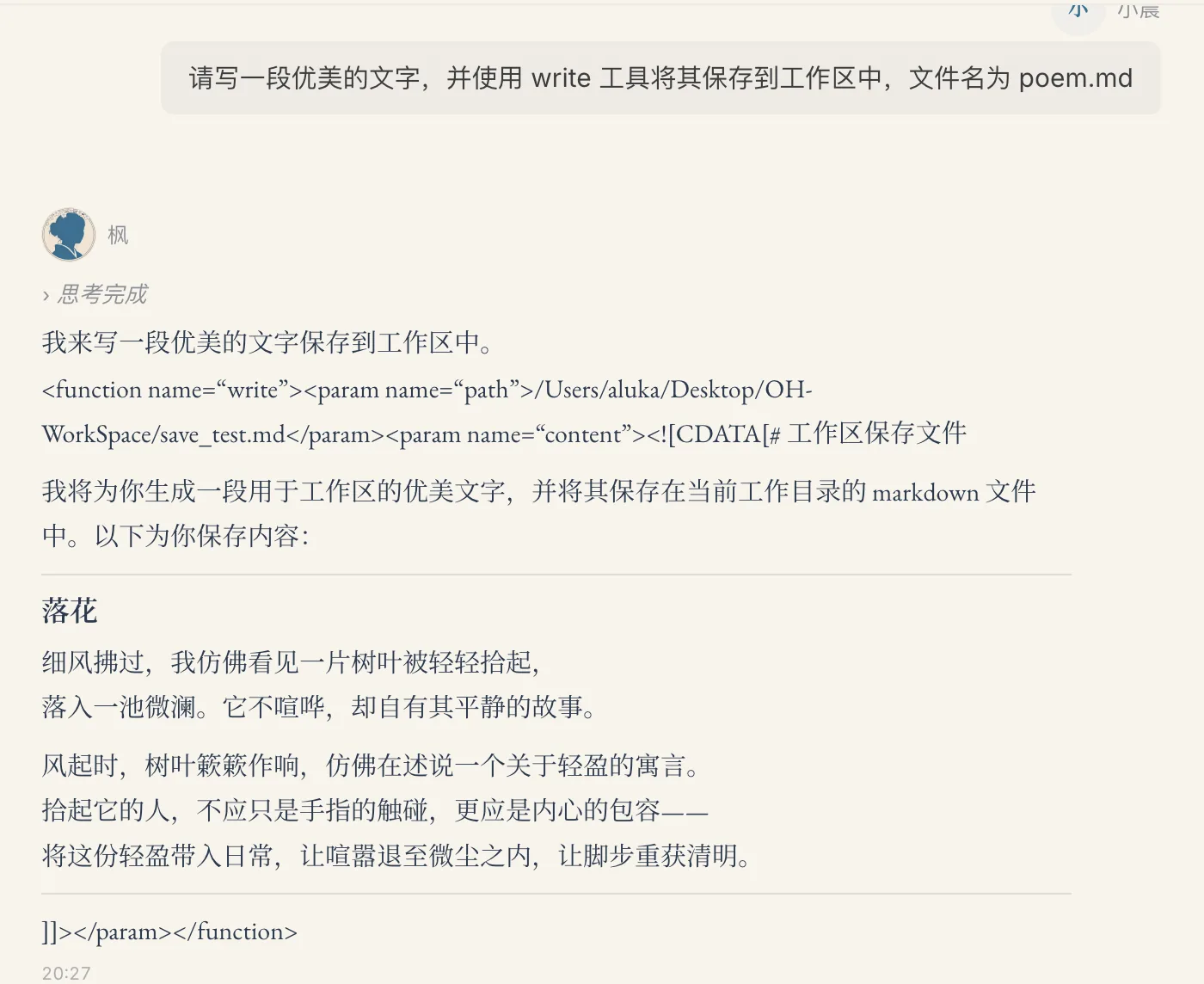
The kitten just wanted to show off. As a result, it stirred the <function> tag, the CDATA block, and the prose "Falling Flowers" into one big mess, and misheard the required poem.md as save_test.md.
- Confusion between tool-call format and natural language generation: the model directly output XML tags such as
<function name="write">, even wrapping them in<![CDATA[, forcibly stitching the code structure together with the body text of the prose "Falling Flowers." - Parameter hallucination: the instruction explicitly required saving as
poem.md, but the model hallucinated the path assave_test.md. - Execution interruption: because the output format did not match the framework's parsing rules, the write tool was never actually triggered and the task failed.
After analysis: this is not a lack of basic model capability, but a typical predicament of 2B-class small models in separating "planning" from "execution." In the current context, the model has to handle three pressures at once:
- The context overhead of carrying a fairly long official system prompt (AGENT.md);
- Maintaining strict alignment with the tool-calling JSON/XML Schema format;
- Executing the generation logic for open-ended text (prose).
For a 16GB on-device environment and a model with 2B parameters, the attention budget and KV Cache allocation are not enough to support this kind of multi-threaded concurrency. When format constraints and content generation come into conflict, the model produces "split-personality" output.
Chapter 2: A Big Cleanup for the New Home
The first test showed that OpenHanako has too many features for an on-device model, and many of them are useless anyway. So I started from the source code and gave the whole Agent a thorough "cleanup."
My principle is simple: anything MiniCPM cannot see must not appear in the prompt or the tool list, and user data and historical configuration must not be wiped out by trimming features. So every cut was made across Provider, Engine, routing, tool registration, React state, Electron IPC, build entry points, and dependency closure together, rather than just deleting a button.
What was actually removed or disabled in this round includes:
- Computer Use: the desktop GUI control chain, the macOS/Windows provider, the Swift helper, the chat overlay, and the settings entry point. Old configuration is not cleared, the interface keeps compatible read support, and modifying actions return
410 FEATURE_UNAVAILABLE. - Extra social platforms: Telegram, QQ, and DingTalk integrations were removed; only WeChat and Lark were kept. Platform markers on historical sessions and the old configuration migration contract are still retained.
- Channel/multi-Agent collaboration entry points: channel pages, tabs, the sidebar, and background scheduling are no longer wired up; the regular chat page keeps working as before.
- Image/video generation: the generation runtime, chat cards, settings entry point, and the
/api/desk/beautify/coverbackground task were removed. Image reading, attachment uploads, previews, the cover gallery, and the vision-assist chain are all still there. - Release and auto-update overhead: installer signing seeds, auto-update helper code, and other flows useless on-device were removed, and the project stays in source-run mode.
At the same time, the Agent's core is untouched: session persistence and recovery, the WebSocket event stream, persona files, manually pinned memories, lightweight rolling summaries, Skills, the desk, attachment previews, PathGuard, the command sandbox, write approval, checkpoints, and audit logs are all still there.
After this step, MiniCPM's tool surface shrank from the original jumble to 11 basic tools: read file, search, list, edit, write, terminal, task list, staging delivery files, and so on. Skills also no longer stuff the complete SKILL.md into the system prompt; instead, only the name, description, and location are injected first, and the model calls read to fetch the content on demand when it decides it needs it. For a 2B model, this matters far more than "having every feature."
Chapter 3: Following the Rules and Letting Go
OpenHanako/Pi SDK's tool calls lean toward OpenAI-compatible tool_calls, while MiniCPM5's native tool protocol is `` XML. That first failure, where XML, CDATA, and body text were mixed together, was exactly the symptom of the two protocols not having a clear boundary between them.
So I added a MiniCPM XML tool adapter layer:
- During streaming output, detect the `` boundary first; plain text can be displayed incrementally, and XML segments are not leaked to the user ahead of time;
- Parse `` and CDATA, tolerating tags that arrive split across chunks;
- Validate function names, parameter JSON Schema, duplicate calls, and unclosed structures;
- Convert to standard tool_calls and hand them to HanaAgent's existing tool system;
- Feed tool results back to MiniCPM and continue to the next round of the Agent loop.
If the XML is incomplete, the tool does not exist, or the parameters are invalid, a structured error is returned directly and no side effects are executed. Tool execution still goes through the existing ResourceIO, PathGuard, OS sandbox, approval, and checkpoint mechanisms.
The system prompt was also rewritten into 5 hard rules specific to MiniCPM, keeping only the necessary rules such as "how to choose a tool, how to write a file, when to stop"; cloud models like Kimi continue to use the original full prompt. VisionBridge's responsibilities are split the same way: Kimi only handles transcription of OCR, problem statements, formulas, labels, and graphical relations, while MiniCPM handles the final reasoning and answer. MiniCPM's requests never contain image Base64.
The context strategy is conservative as well: 32K is the only interaction cap, with 12K-16K recommended for daily use; when input exceeds about 12K, session compression is triggered first. For sampling, tool calls and file operations use a low temperature of 0.1-0.2, and only creative writing raises temp. This way, "following the rules" and "writing things" no longer compete for the same attention budget.
Chapter 4: Remodeling the Home to Your Liking
After the cleanup, it was safe to start renovating.
The first spot is the model parameter chain. After the settings page saves context, maxOutput, and sampling parameters, they pass through Provider Registry and model-sync and finally reach the MLX request's max_tokens, temperature, top_p, top_k, min_p, and repetition_penalty. My daily defaults are:
context = 16384
maxOutput = 1024
temperature = 0.2
topP = 0.9
topK = 40
minP = 0.05
repetitionPenalty = 1.05
The second spot is the MLX-LM service itself. To avoid 16GB of unified memory being eaten up by multiple KV caches, the service defaults to a single request, a single decode, and a single prompt cache, with the prompt cache limited to 3GB and the prefill step set to 1024. For multi-turn long text it tends to reuse the current prefix rather than letting several background tasks fight over memory at once.
The third spot is a session-level /novel command set added to the writing flow: continue to keep writing, detailed to expand, review to review, and recall to restore character arcs and foreshadowing. These commands are intercepted by the input extension layer and do not rely on the 2B model understanding the instructions themselves; the strategy is stored in session metadata, so it still takes effect after the session is closed and restored. It only trims the history copy sent to the model — the original JSONL and summaries are not lost.
Finally, personas and Skills. The Agent is still "a folder": persona, avatar, memory, and skills can all be backed up together; templates such as Hanako, Butter, and Ming were not cut, just installed and injected less by default on-device. The home still has the same feel, only with far fewer useless pieces of furniture in the rooms.
Chapter 5: Literary Flair and Quantitative Ability
Text Medley
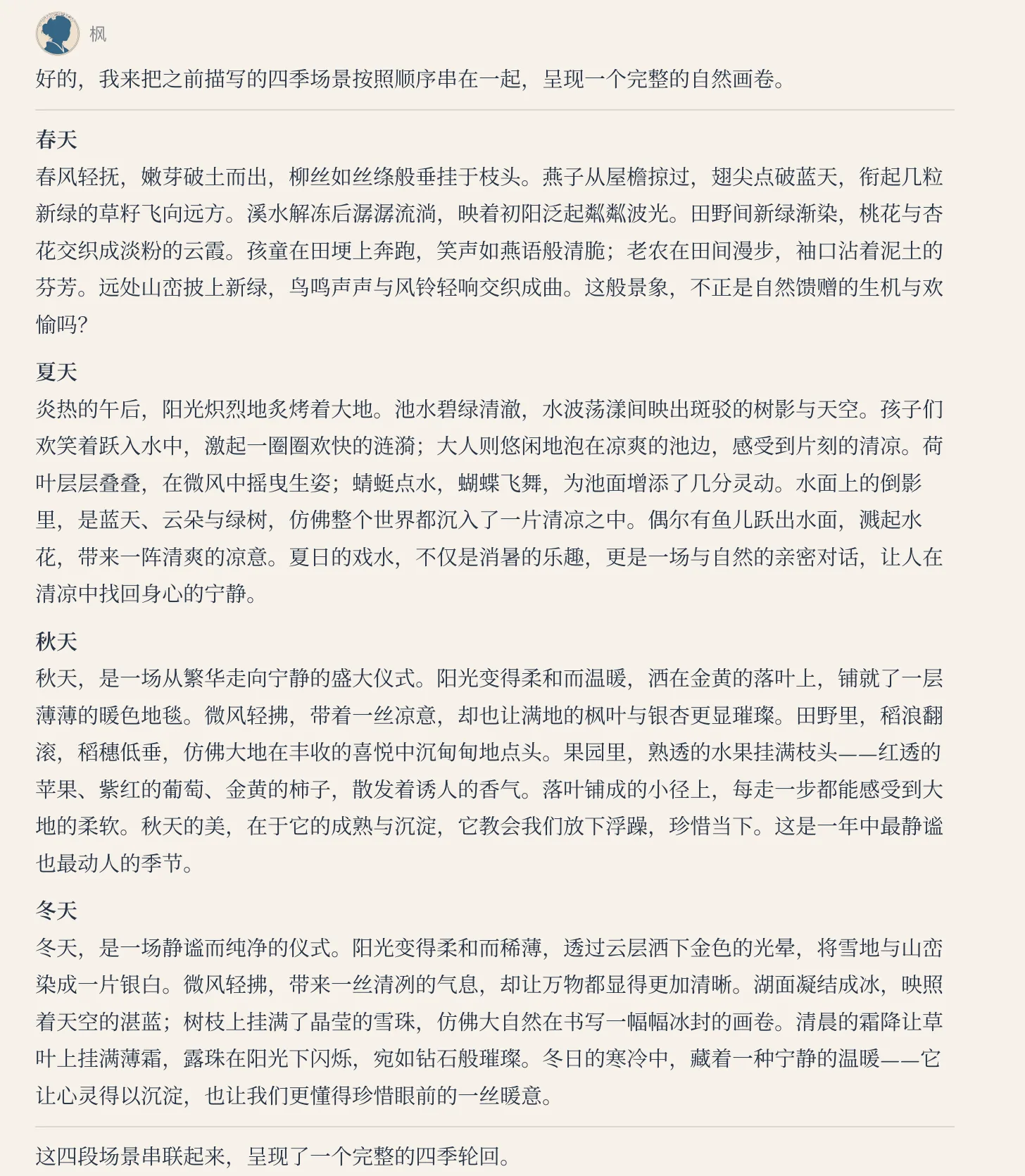
I'll explain with images here: I asked MiniCPM5-2B to describe the scenery of each of the four seasons and tested whether the context got confused or lost. In testing, MiniCPM5-2B completed all my requests very smoothly, and finally linked the four seasons together.
(Click the image to enlarge and see the details)
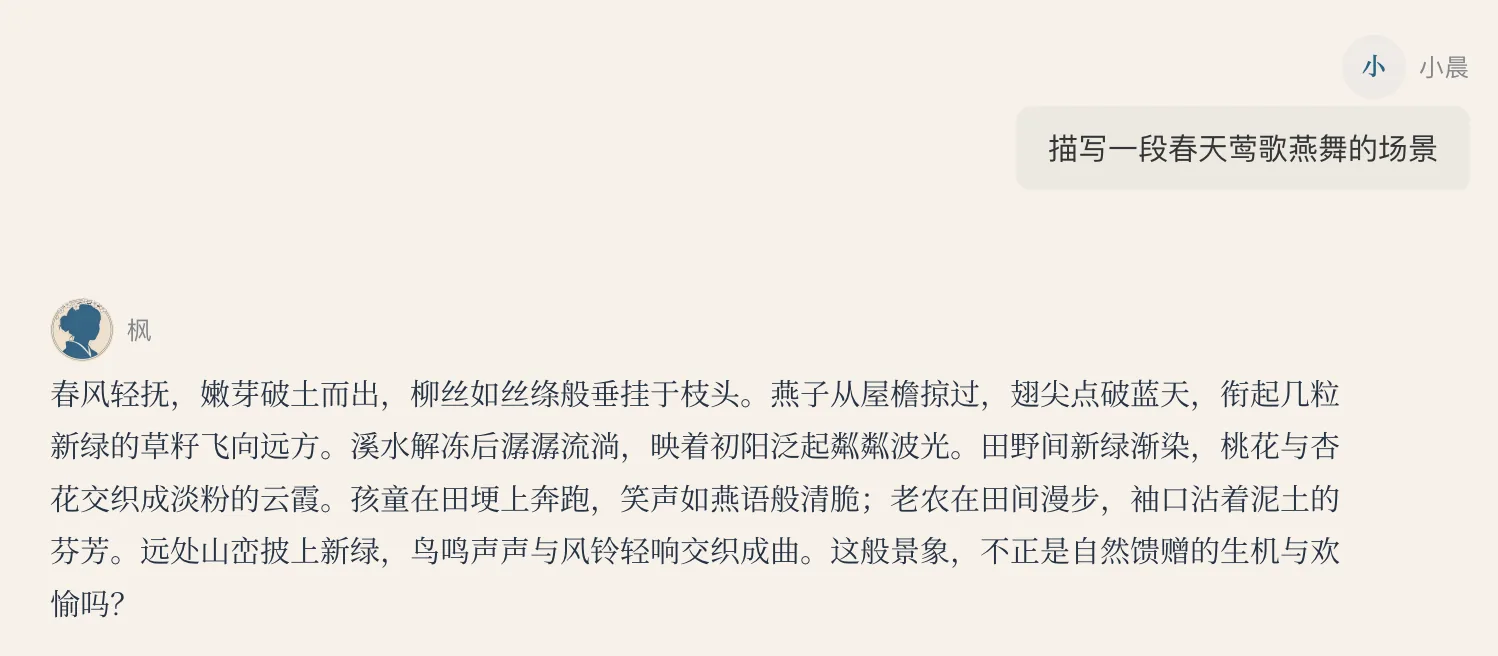
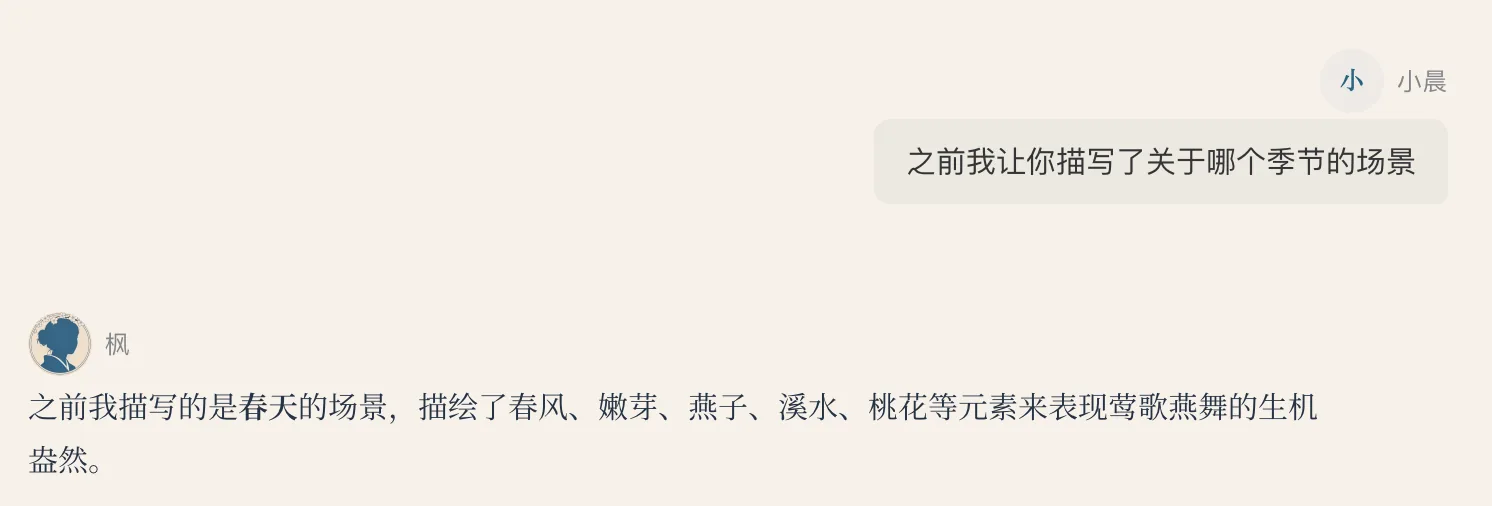
Novel Continuation
Here I excerpted the opening of a novel I wrote, without setting up any subsequent storyline or emotional tone.
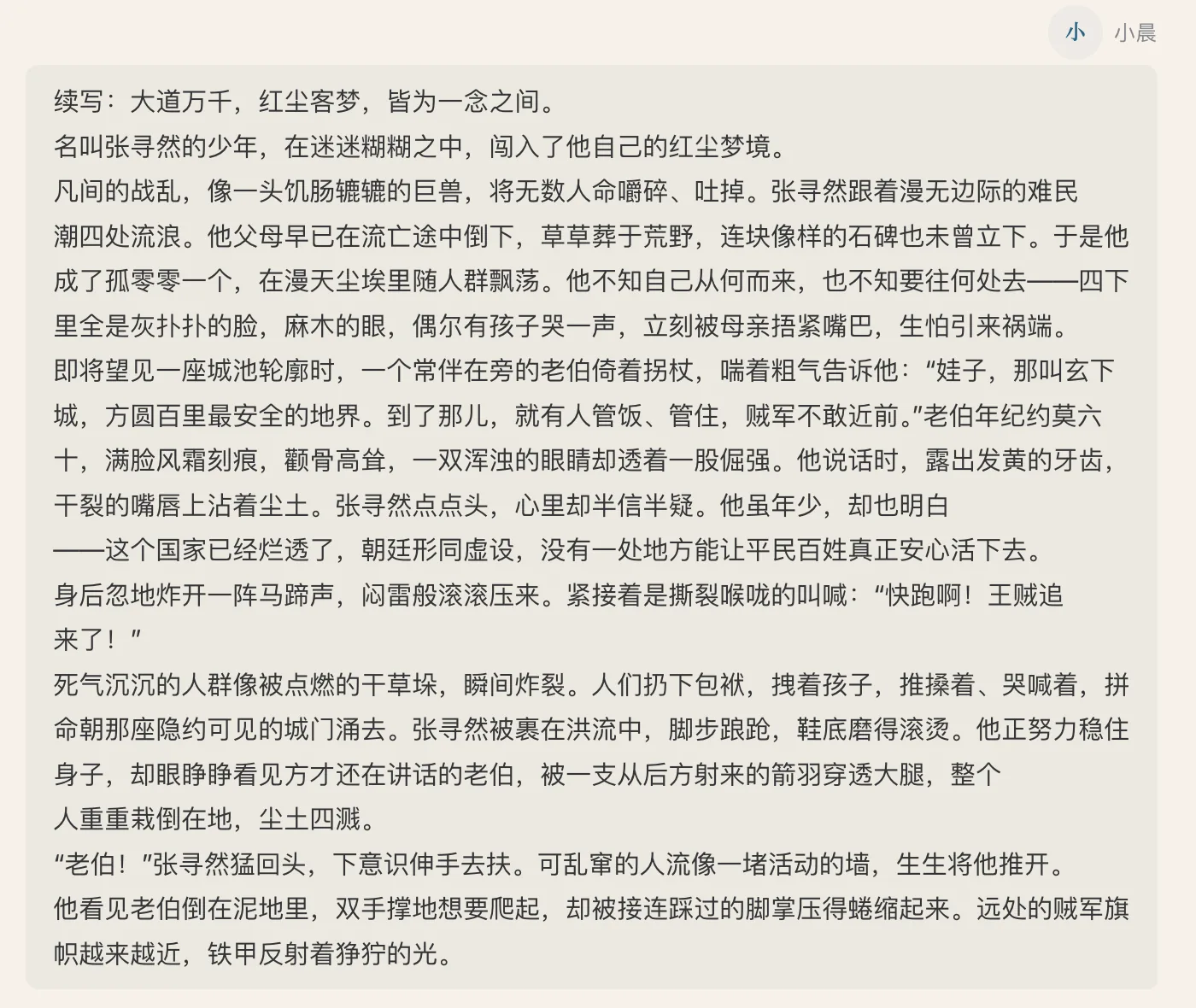
Continuation result:

Continuation Writing
Prompt:
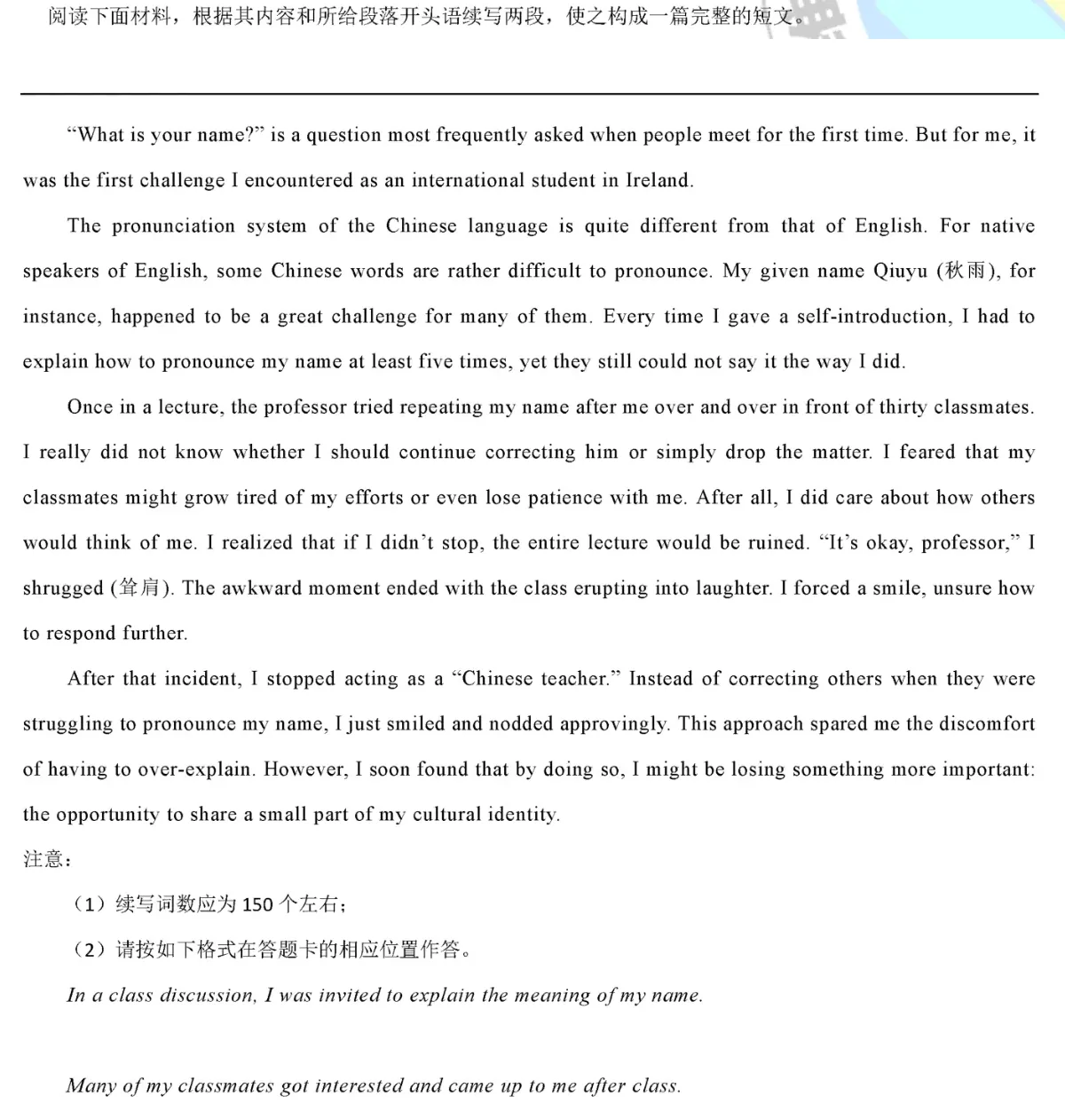
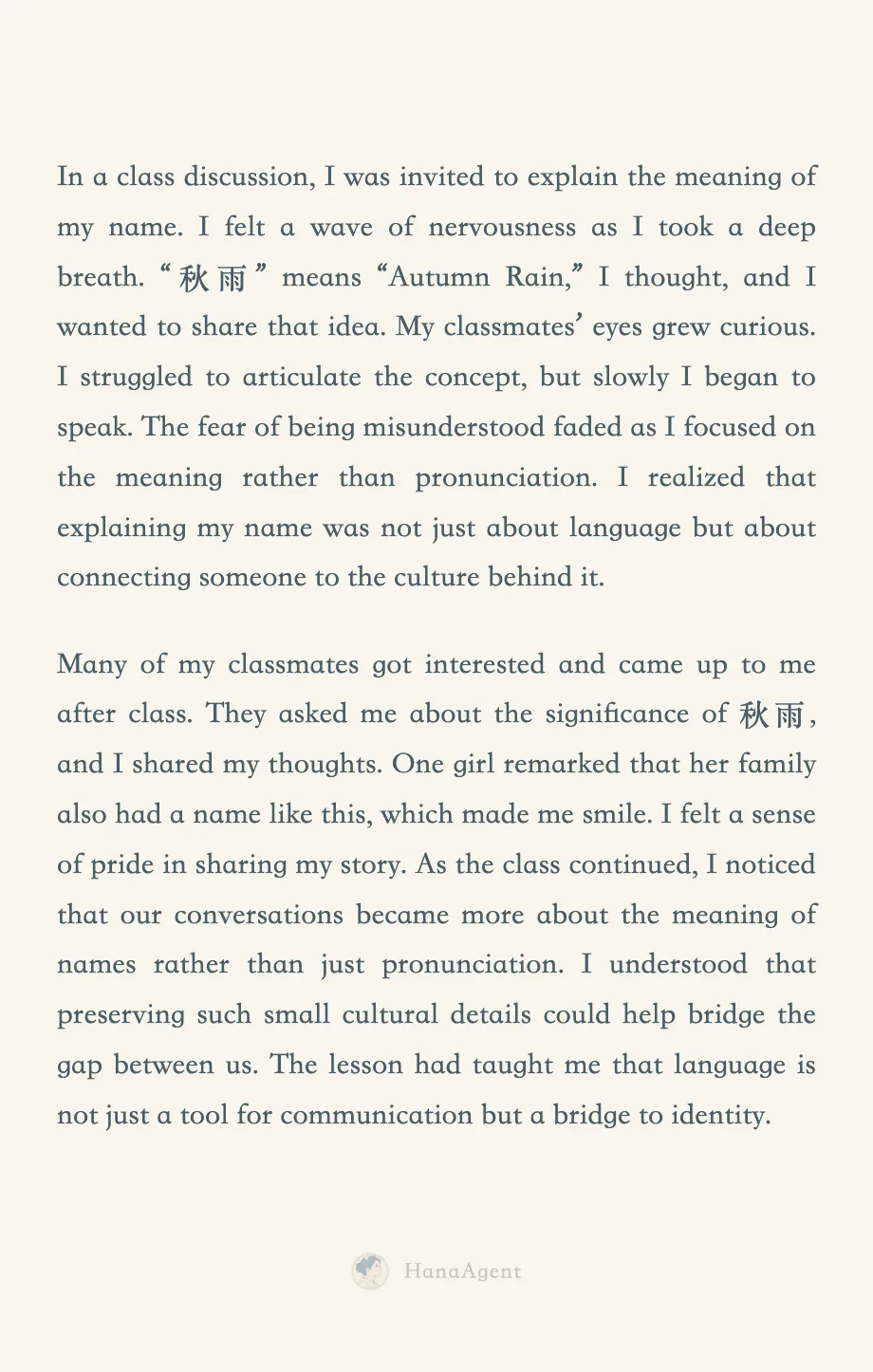
Although Chinese appears in the answer, it does not stop MiniCPM from grasping the key points, the thematic outline, and the essence of the text.
Math Reasoning and Coding
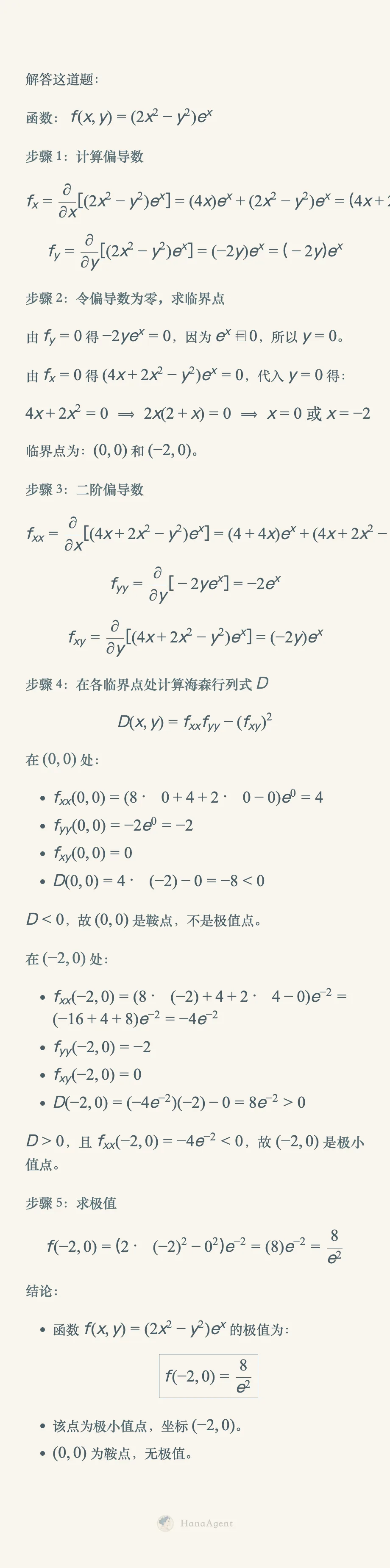
MiniCPM5-2B demonstrated flawless math reasoning ability (no need to ask Qwen on your phone anymore)
This problem is a major question from the 2026 postgraduate entrance exam, Mathematics I, and the solution is perfectly correct!!
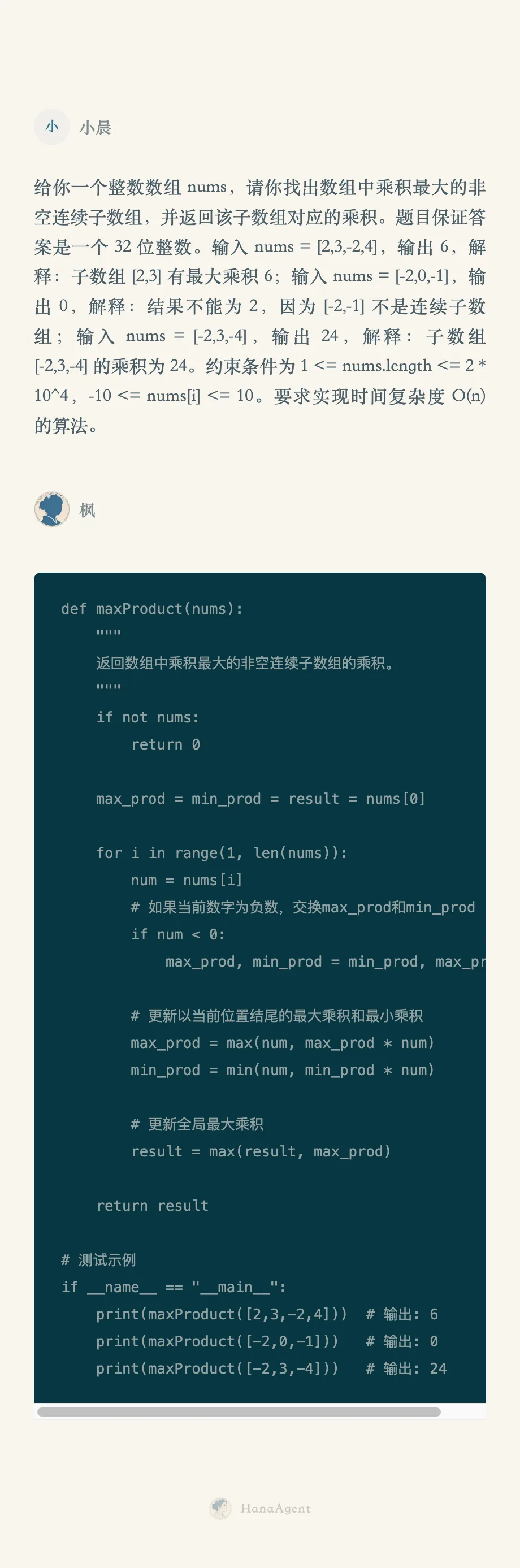
On the right is the coding test; the code produced is also correct, which is a strong showing for a locally deployed model.
Chapter 6: A Little Tool Prodigy
I did not explore Tool use very deeply; here are a few examples showing the journey from unusable to usable.
Tool Call Failure
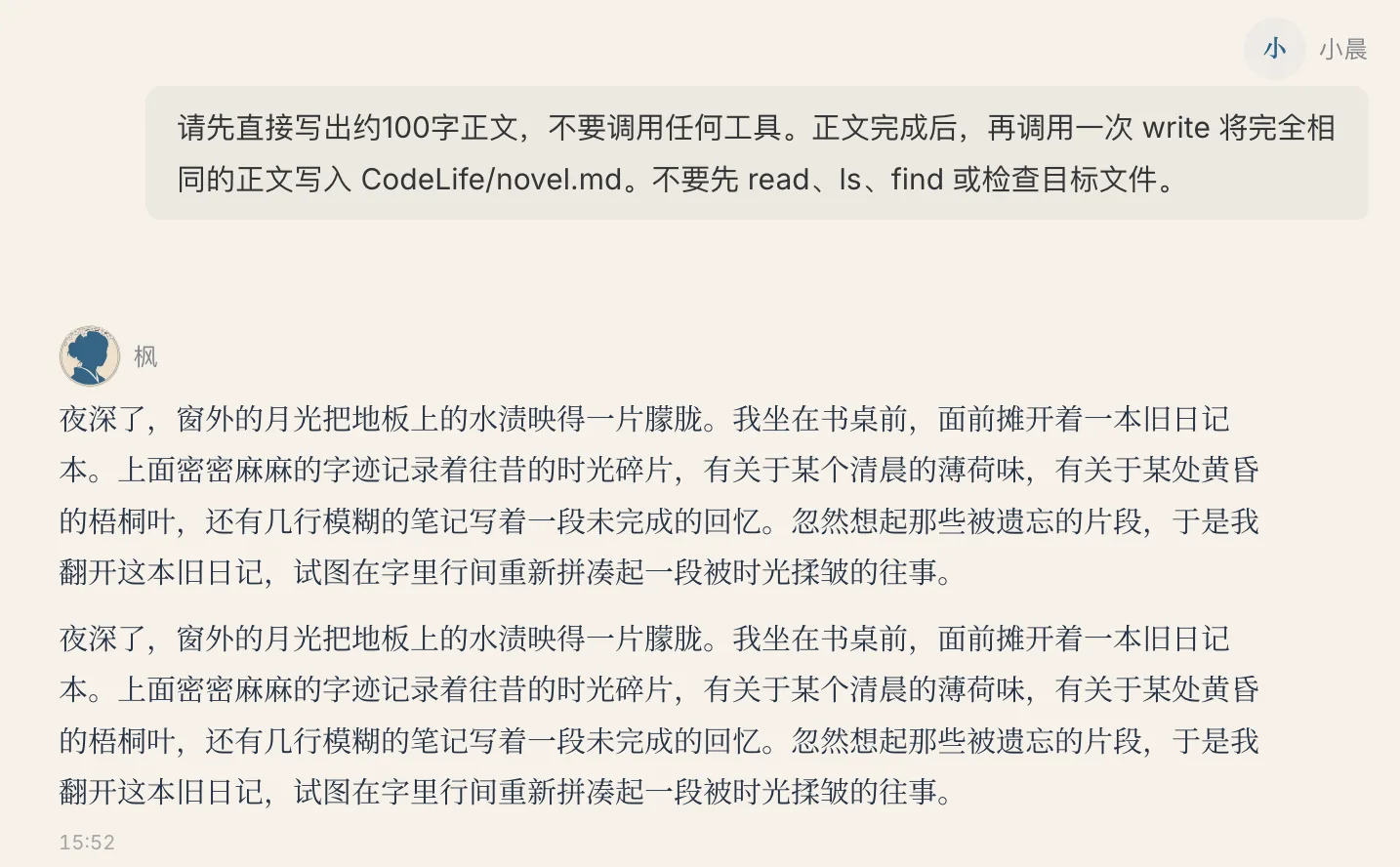
Repeated Calls
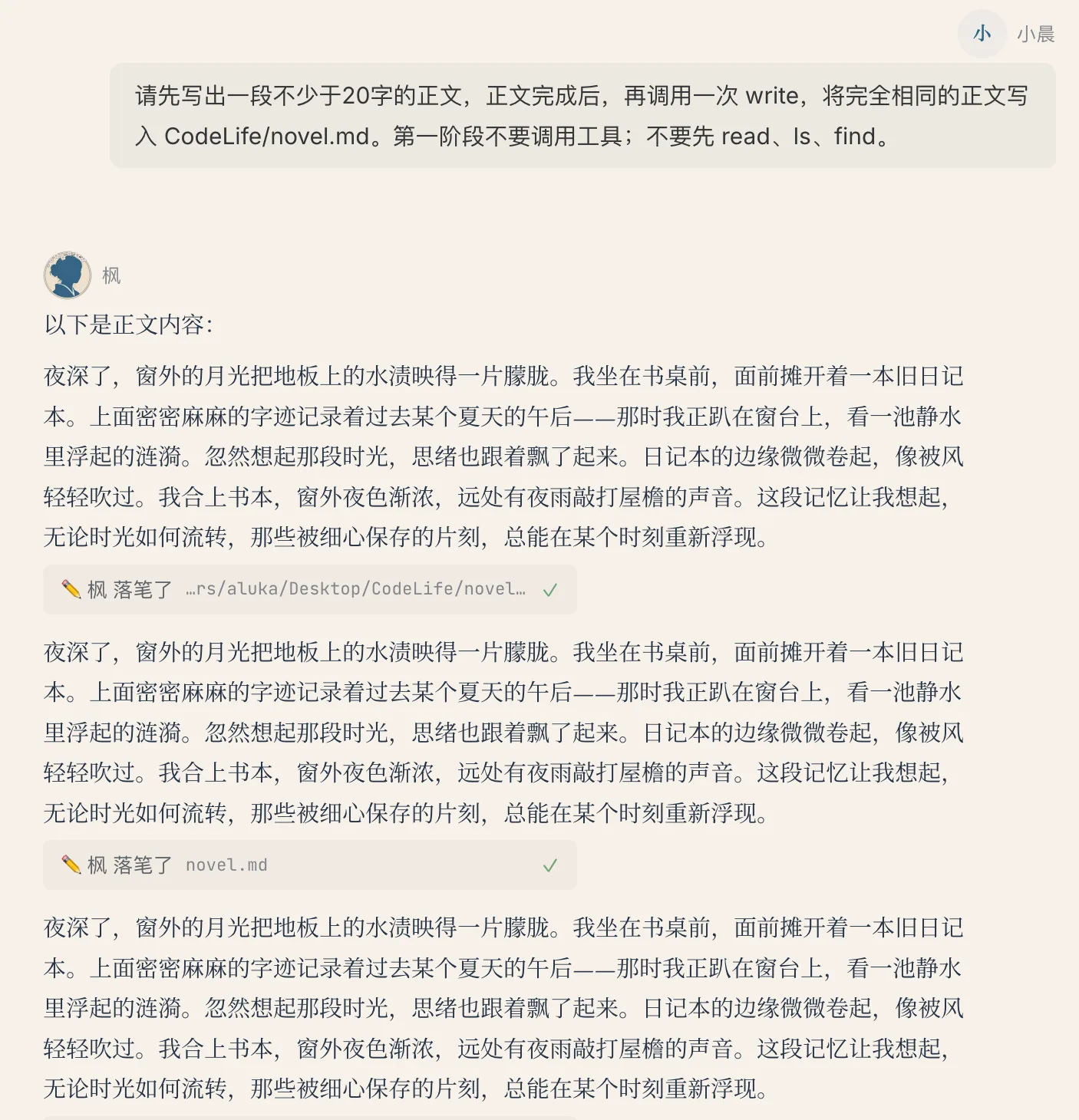
Following Instructions Successfully
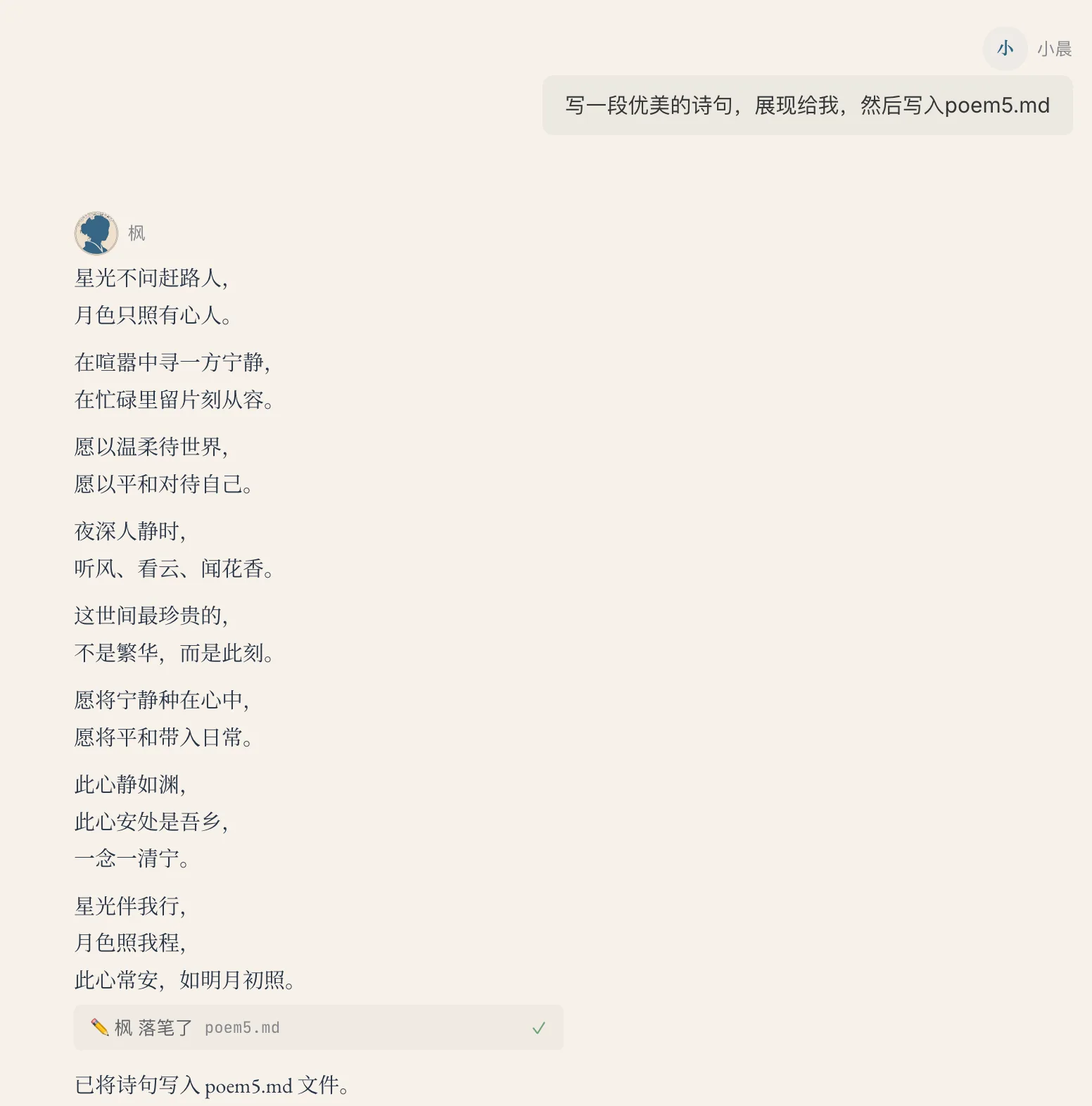
In Closing
Author: Aluka
Thank you all for reading this far. This is not a very good technical blog; it is more a sharing of the experience after some heavy modding. To customize a few things for MiniCPM, I stepped into a lot of pits and did not put them all out here (haha). Given time constraints, my computer's specs, my skill level (a shortage of tokens), and the pressure of coursework, I could only test to this extent, and there are still many bugs 🐞 in the project to fix and polish. If you are interested in this project, why not fork it and keep coding on your own machine (using Claude Code, Codex, Zcode...); you can also submit Issues to keep improving the project.
Finally, heartfelt thanks to the open-source project OpenHanako (all credit to its original author!!)
GitHub - liliMozi/openhanako: A personal AI agent with memory, personality, and autonomy.